 Practice French
B2Full sample
La radio du quartier
The Neighborhood Radio — Nora uses a small local radio project to turn an ignored kiosk into a public issue.
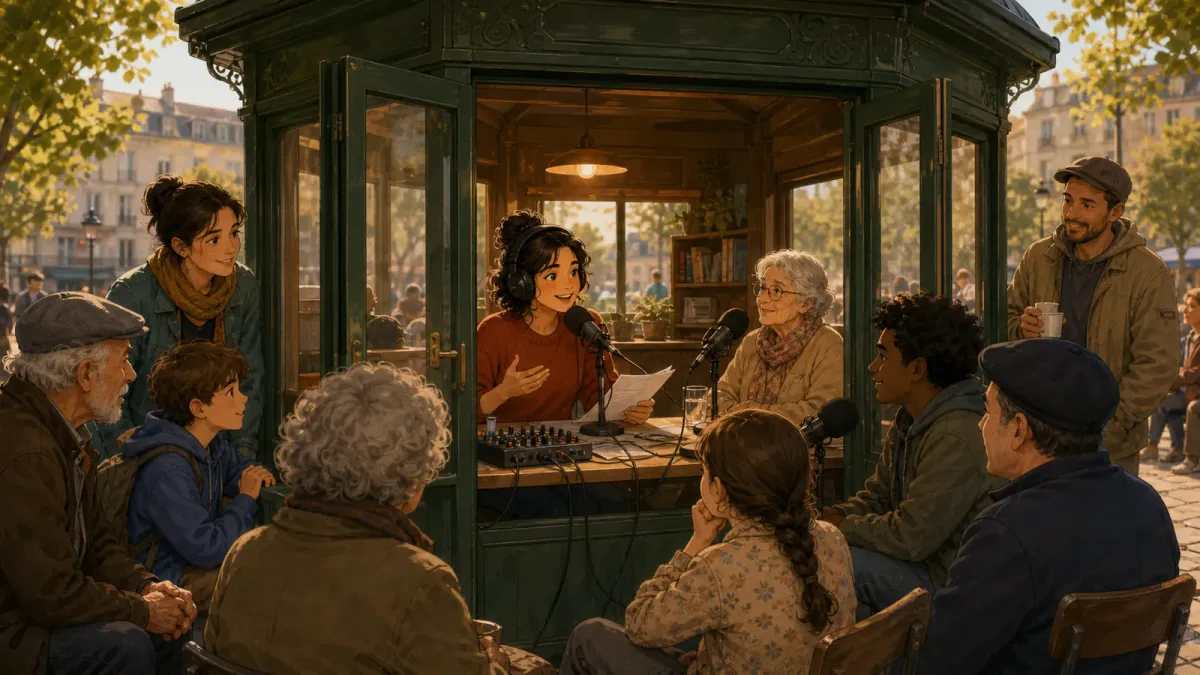
Écouter · listen to the opening
The complete recorded narration.
Lire · read in French
Lorsque la mairie annonce que l'ancien kiosque sera transformé en parking, Nora propose une idée presque absurde: installer une radio de quartier avant que les travaux commencent. Avec deux micros empruntés et un ordinateur fatigué, elle invite les habitants à raconter ce que le kiosque représente pour eux. Les premiers témoignages sont maladroits, puis les voix se répondent: un coiffeur se souvient des concerts d'été, une infirmière décrit l'ombre où elle mangeait après ses gardes, des adolescents défendent simplement un endroit où attendre sans consommer. L'émission circule sur les téléphones et oblige les élus à organiser une réunion publique. Rien n'est gagné; le budget reste serré et les plans sont déjà signés. Pourtant, le débat change de nature. Le kiosque n'est plus une case vide sur une carte municipale, mais un lieu habité par des récits. Nora enregistre alors un dernier épisode, non pour célébrer une victoire, mais pour apprendre aux voisins à écouter les nuances de leur propre désaccord. C'est peut-être là que commence la politique ordinaire.
Key vocabulary
- un kiosquea kiosk
- emprunterto borrow
- un témoignagea testimony / personal account
- un éluan elected representative
- un désaccorda disagreement
Show English translation
When the town hall announces that the old kiosk will be turned into a parking lot, Nora suggests an almost absurd idea: setting up a neighborhood radio station before the work begins. With two borrowed microphones and a tired computer, she invites residents to describe what the kiosk means to them. The first testimonies are awkward, then the voices answer one another: a hairdresser remembers summer concerts, a nurse describes the shade where she ate after her shifts, and teenagers simply defend a place where they can wait without buying anything. The broadcast circulates on phones and forces elected officials to hold a public meeting. Nothing is won; the budget remains tight and the plans are already signed. Yet the debate changes in nature. The kiosk is no longer an empty square on a municipal map, but a place inhabited by stories. Nora then records one final episode, not to celebrate a victory, but to teach neighbors to listen to the nuances of their own disagreement. Perhaps that is where ordinary politics begins.
Comprehension questions
1. Why does Nora start the neighborhood radio?
- To advertise a new parking lot
- To collect residents’ stories about the kiosk before work begins
- To sell old computers
- To broadcast traffic reports only
Show answer
To collect residents’ stories about the kiosk before work begins
2. Who remembers summer concerts?
- A nurse
- A hairdresser
- A mayor
- A bus driver
Show answer
A hairdresser
3. The radio broadcast immediately cancels the parking plan.
Show answer
false
4. Fill in the blank: Le kiosque n’est plus une case vide sur une carte ___.
Show answer
municipale
5. What does “témoignages” mean?
- testimonies
- budgets
- microphones
- maps
Show answer
testimonies
Continue interactively
Open this exact story for the full narration, comprehension exercises, dictation, translation help, and saved progress.