 Practice French
B2Full sample
La machine à écouter les plantes
The Machine for Listening to Plants — Nora builds a plant sensor and learns that technology can help people observe nature more honestly.
Écouter · listen to the opening
The complete recorded narration.
Lire · read in French
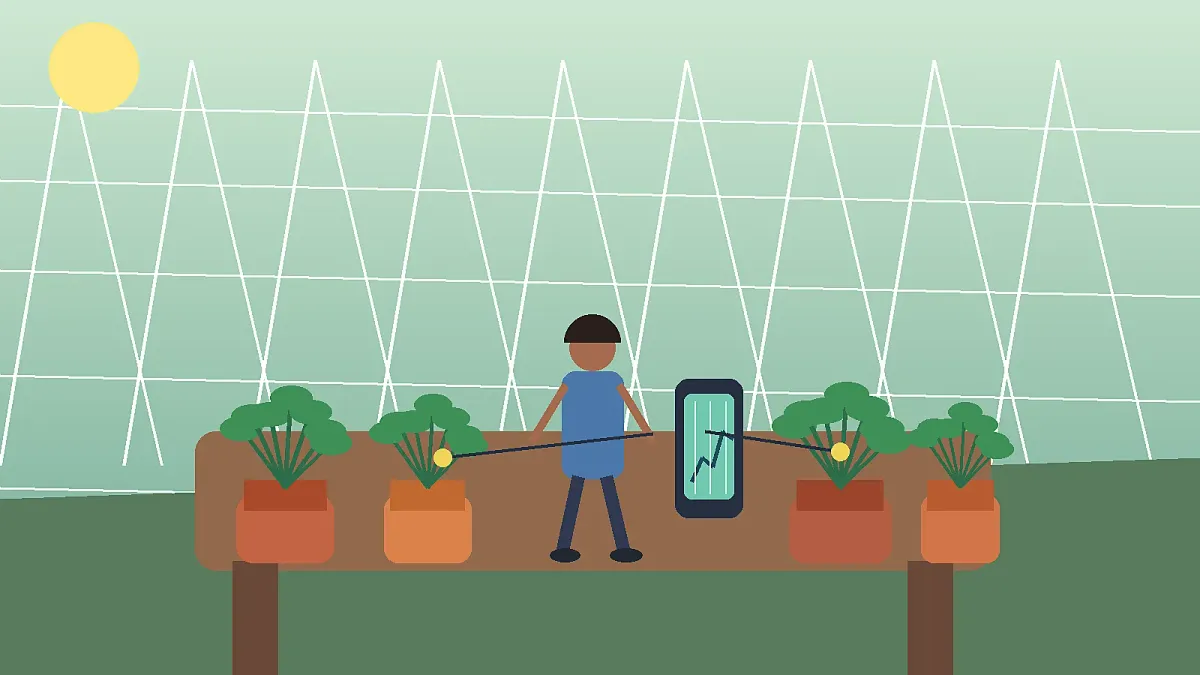
Nora préparait un concours scientifique avec une idée qui faisait rire sa classe : une machine pour écouter les plantes. Elle ne prétendait pas traduire les pensées d’un basilic ou les secrets d’un chêne. Son appareil, construit avec un vieux téléphone, deux capteurs et beaucoup de ruban adhésif, mesurait l’humidité du sol, la lumière et de minuscules variations électriques dans les feuilles.
Au début, les résultats semblaient inutiles. Les graphiques montaient et descendaient sans logique claire. Son professeur lui a conseillé de noter aussi les gestes humains : arrosage, déplacement du pot, fenêtre ouverte. Nora a alors compris que les plantes ne parlaient pas en phrases, mais en réactions. Quand la serre devenait trop chaude, les courbes changeaient avant même que les feuilles pendent.
Le jour du concours, un journaliste lui a demandé si sa machine donnait une voix à la nature. Nora a hésité. « Elle ne donne pas une voix, elle nous oblige à mieux regarder », a-t-elle répondu. Son projet n’a pas gagné le premier prix, mais une ferme urbaine lui a proposé de tester l’appareil. Nora est rentrée chez elle convaincue qu’écouter commence souvent par arrêter d’inventer des réponses.
Key vocabulary
- capteurssensors
- humiditéhumidity / moisture
- variations électriqueselectrical variations
- serregreenhouse
- ferme urbaineurban farm
Show English translation
Nora was preparing a science competition with an idea that made her class laugh: a machine for listening to plants. She did not claim to translate the thoughts of a basil plant or the secrets of an oak tree. Her device, built with an old phone, two sensors, and a lot of adhesive tape, measured soil humidity, light, and tiny electrical variations in leaves.
At first, the results seemed useless. The graphs went up and down without a clear logic. Her teacher advised her to also note human actions: watering, moving the pot, opening a window. Nora then understood that plants did not speak in sentences, but in reactions. When the greenhouse became too hot, the curves changed before the leaves even drooped.
On the day of the competition, a journalist asked whether her machine gave nature a voice. Nora hesitated. “It doesn’t give a voice; it forces us to look more carefully,” she answered. Her project did not win first prize, but an urban farm offered to test the device. Nora went home convinced that listening often begins by stopping ourselves from inventing answers.
Comprehension questions
1. What does Nora finally understand about her machine?
- It helps people observe plant reactions instead of imagining plant words.
- It can translate every plant into French.
- It works only when nobody waters the plants.
- It proves that plants dislike greenhouses.
Show answer
It helps people observe plant reactions instead of imagining plant words.
2. What does the teacher advise Nora to note?
- Human actions such as watering or moving the pot
- The names of all journalists
- The price of each sensor
- The exact age of the greenhouse
Show answer
Human actions such as watering or moving the pot
3. Nora claims that her device translates the thoughts of plants.
Show answer
false
4. Fill in the blank: Son appareil mesurait l’humidité du sol, la lumière et de minuscules variations ___ dans les feuilles.
Show answer
électriques
5. What does “capteurs” mean?
- sensors
- greenhouses
- answers
- leaves
Show answer
sensors
Continue interactively
Open this exact story for the full narration, comprehension exercises, dictation, translation help, and saved progress.