 Practice French
C1Full sample
Les archives du brouillard
The Archives of Fog — An archivist uncovers contested street names and argues that memory should not be confused with peace.
Écouter · listen to the opening
The complete recorded narration.
Lire · read in French
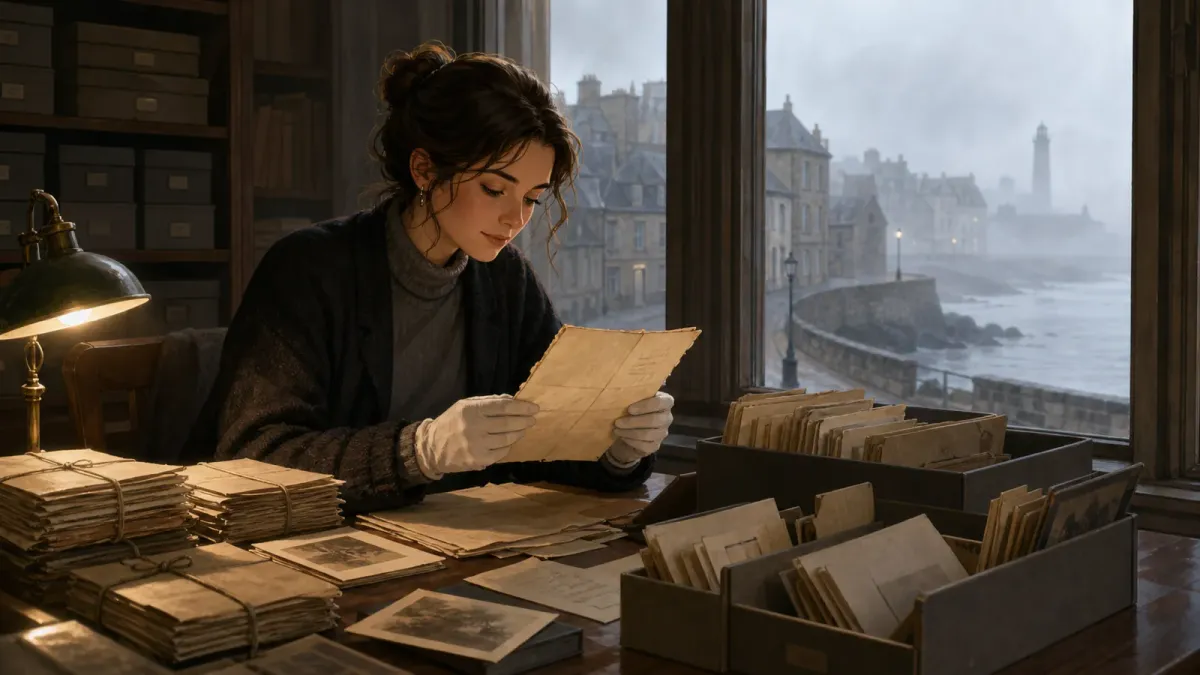
À Saint-Malo, le brouillard n'efface pas seulement l'horizon; il modifie la mémoire des habitants. Chaque hiver, des touristes demandent pourquoi certaines rues changent de nom selon les plans. La réponse officielle tient en une phrase: après la guerre, plusieurs tracés furent rétablis à partir de documents incomplets. Mais Élise, archiviste municipale, soupçonne une histoire moins nette. Dans les cartons humides d'un ancien dépôt, elle découvre des lettres où des riverains défendaient des noms oubliés, non par nostalgie, mais pour préserver des alliances, des dettes, des actes de courage minuscules. Plus elle lit, plus la ville lui paraît construite sur des compromis silencieux. Lorsqu'elle propose une exposition, le maire craint de rouvrir des querelles. Élise répond qu'une archive ne répare rien par elle-même; elle empêche seulement l'oubli de se faire passer pour la paix. Elle choisit finalement de présenter les documents avec leurs contradictions, sans légende consolatrice. Certains visiteurs protesteront; d'autres reconnaîtront, dans ces hésitations, une fidélité plus exigeante que la version lisse des brochures.
Key vocabulary
- un tracéa route / layout
- un riveraina local resident
- une dettea debt
- rouvrir une querelleto reopen a dispute
- se faire passer pourto pass oneself off as
Show English translation
In Saint-Malo, fog does not merely erase the horizon; it alters the memory of the inhabitants. Every winter, tourists ask why certain streets change names depending on the maps. The official answer fits into one sentence: after the war, several routes were restored from incomplete documents. But Élise, the municipal archivist, suspects a less tidy story. In the damp boxes of an old storage room, she discovers letters in which residents defended forgotten names, not out of nostalgia, but to preserve alliances, debts, and tiny acts of courage. The more she reads, the more the city seems built on silent compromises. When she proposes an exhibition, the mayor fears reopening old disputes. Élise replies that an archive repairs nothing by itself; it only prevents forgetting from passing itself off as peace. She finally chooses to present the documents with their contradictions, without a consoling caption. Some visitors will protest; others will recognize, in these hesitations, a loyalty more demanding than the smooth version in the brochures.
Comprehension questions
1. What does Élise mainly discover?
- The maps were printed in the wrong color.
- Street names are tied to forgotten local conflicts and memories.
- The mayor wrote all the letters himself.
- The tourists invented the street names.
Show answer
Street names are tied to forgotten local conflicts and memories.
2. What does Élise mean by refusing to let forgetting pass for peace?
- Every archive automatically repairs past injustice.
- Public disagreement is always preferable to agreement.
- Historical documents provide a single uncontested truth.
- Suppressing disputed memories may conceal conflict without resolving it.
Show answer
Suppressing disputed memories may conceal conflict without resolving it.
3. The mayor immediately supports Élise’s exhibition without concern.
Show answer
false
4. Why can the contradictory exhibition be called a more demanding fidelity?
- It guarantees unanimous approval from residents.
- It remains faithful to difficult evidence instead of offering a comforting unified story.
- It restores the mayor’s preferred version of the past.
- It removes doubtful letters from public view.
Show answer
It remains faithful to difficult evidence instead of offering a comforting unified story.
5. What does “se faire passer pour” mean in this context?
- to pass itself off as
- to walk past
- to repair completely
- to count aloud
Show answer
to pass itself off as
Continue interactively
Open this exact story for the full narration, comprehension exercises, dictation, translation help, and saved progress.